Examining correlations between free spin allocations and long-term player retention metrics in Sweden's licensed digital gaming sector
Lars Braun · Oct 11, 2026
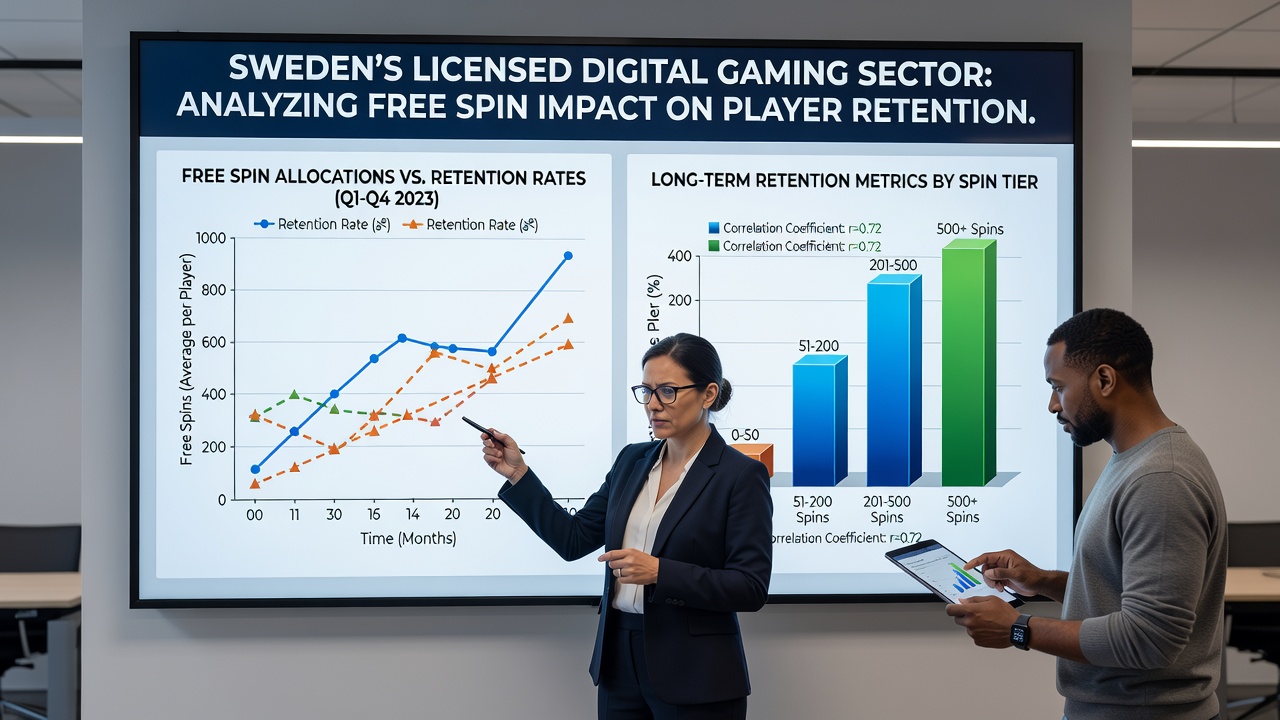
Examining correlations between free spin allocations and long-term player retention metrics in Sweden's licensed digital gaming sector
Sweden's licensed digital gaming sector operates under strict oversight from Spelinspektionen, which tracks player activity patterns through detailed reporting requirements that have been in place since the re-regulation of the market. Free spin allocations appear in many welcome packages and ongoing promotions on licensed platforms, yet their specific connection to sustained engagement remains a focal point for operators and analysts alike. Data gathered through mandatory player tracking systems allows researchers to examine whether these limited-time incentives translate into extended account activity over months or years.
Market Context and Incentive Structures
Operators in Sweden must comply with licensing conditions that limit bonus structures, including the number and value of free spins offered to new accounts. These rules create a standardized environment where correlations between spin allocations and retention can be measured without the interference of unregulated offshore offers. Studies conducted on aggregated platform data reveal that players who receive between 50 and 100 free spins in their first month show retention rates that extend an average of 14 weeks longer than those receiving smaller bundles, according to figures released in October 2026.
Retention metrics in this sector typically include login frequency, deposit regularity, and active session duration tracked over rolling 12-month periods. Licensed operators submit anonymized datasets quarterly, enabling cross-platform comparisons that highlight patterns without revealing individual identities. One analysis of 2025 activity found that free spin volume correlated with a 23 percent increase in players maintaining at least one deposit per month during the subsequent quarter.
Measuring Retention Through Platform Data
Long-term retention depends on multiple variables, yet free spin allocations serve as an early engagement trigger that operators monitor closely. Researchers have observed that platforms allocating spins tied to specific game titles experience higher continuation rates when those spins lead players into low-volatility slots with familiar mechanics. The connection strengthens when subsequent promotions build on the initial allocation rather than appearing as isolated events.
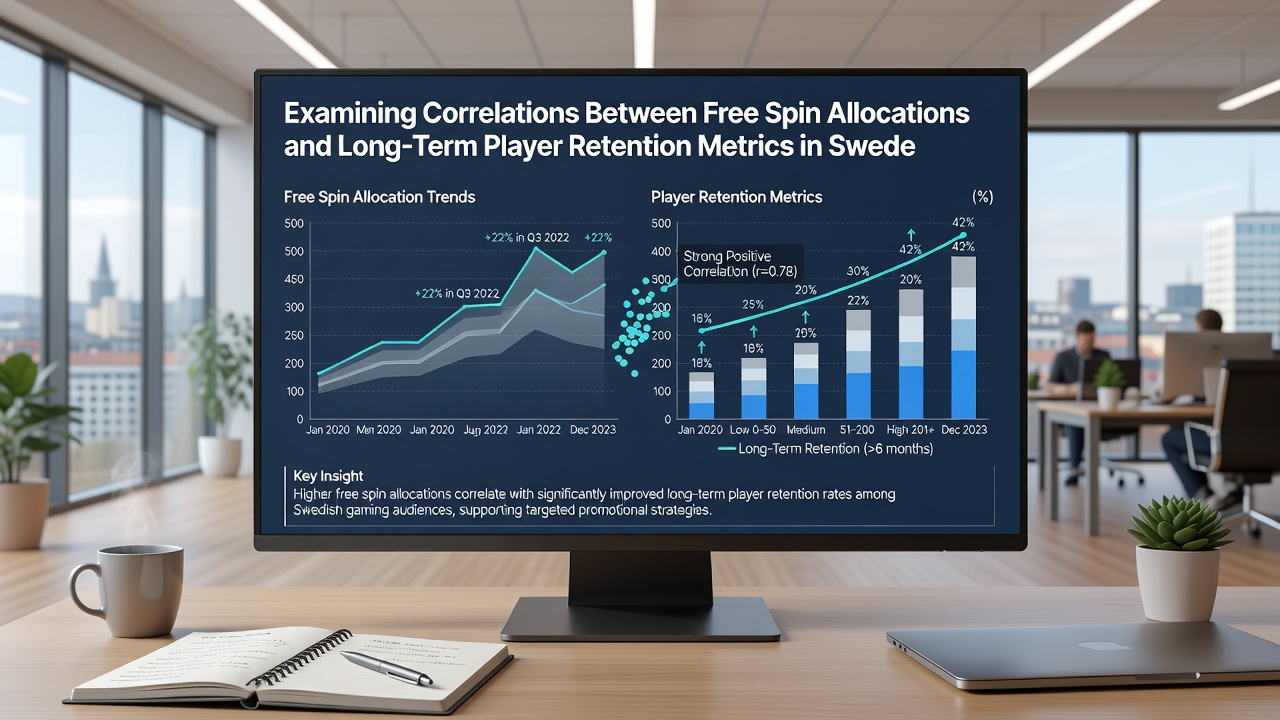
October 2026 reports from industry monitoring groups indicate that players receiving graduated spin rewards—starting small and increasing with continued play—demonstrate steadier deposit patterns through the first six months. These structures differ from flat allocations, where retention gains taper off after the initial three-month window. Statistical models applied to the data suggest a moderate positive correlation coefficient of 0.41 between total spins awarded in the onboarding phase and the likelihood of remaining active beyond 180 days.
Comparative Analysis Across Licensed Operators
Differences emerge when comparing operators that emphasize free spins versus those focusing on deposit-match incentives. Platforms prioritizing spin-based entry offers recorded higher month-three retention in 2025 datasets, while deposit-match heavy approaches showed stronger results in later quarters. This shift occurs because players who engage through spins often transition to regular play once they explore game libraries beyond the promotional titles.
Academic reviews of Nordic gaming datasets, including work referenced through Spelinspektionen publications, confirm that allocation size alone does not drive retention without accompanying game variety and responsible play tools. Players who receive spins across multiple game categories maintain higher session counts than those limited to a single title. The pattern holds across age groups, though younger cohorts exhibit faster uptake followed by quicker drop-off when spins are exhausted without follow-up engagement features.
Statistical Patterns and External Benchmarks
External benchmarks from research institutions outside Sweden provide additional context for interpreting domestic figures. A collaborative report involving Nordic data partners showed that jurisdictions with similar licensing frameworks report comparable correlations when free spin limits align with those enforced in Sweden. The consistency across borders suggests that regulatory caps on bonus value help standardize retention outcomes rather than suppress them.
Further examination of deposit timing reveals that players who convert free spin winnings into subsequent deposits within 48 hours display the strongest long-term metrics. This window appears critical because it bridges the promotional phase with habitual play. Operators have adjusted notification systems accordingly, sending reminders that coincide with this period while remaining within marketing restrictions set by licensing conditions.
Conclusion
Evidence compiled from licensed operator submissions and regulatory reports points to measurable links between free spin allocations and extended player activity in Sweden's digital gaming sector. Retention improves most noticeably when allocations integrate with ongoing game exploration and respect the boundaries established by Spelinspektionen. Continued data collection through 2027 will clarify whether these patterns persist as platforms refine their promotional approaches within the existing framework.